See also: privacy policy and copyright policy.
TL;DR: I reject generative AI tools for all types of media. There is no ethical use of AI built on stolen data.
Writing, painting, music, and other creative endeavors, are meant to be a communication from the artist to their audience. We’re in this business to entertain, enlighten, and to share our own unique perspective. We put our heart and soul into our work, as a gift to those who receive it.
When generative AI is used to produce “content,” half of this relationship is missing; communication isn’t real if there’s nobody on the sending end. Large Language Models and image generation software produce nothing new. They have no heart, no soul, not even a mind. They work from giant databases of stolen material, running it through a blender to produce a jumbled-up slurry that may resemble art in form, but lacks depth, cohesiveness, novelty, and applicability to current events. It’s easy for people to imagine there’s something there, but that all comes from the reader. There’s a reason this stuff is called “slop.”
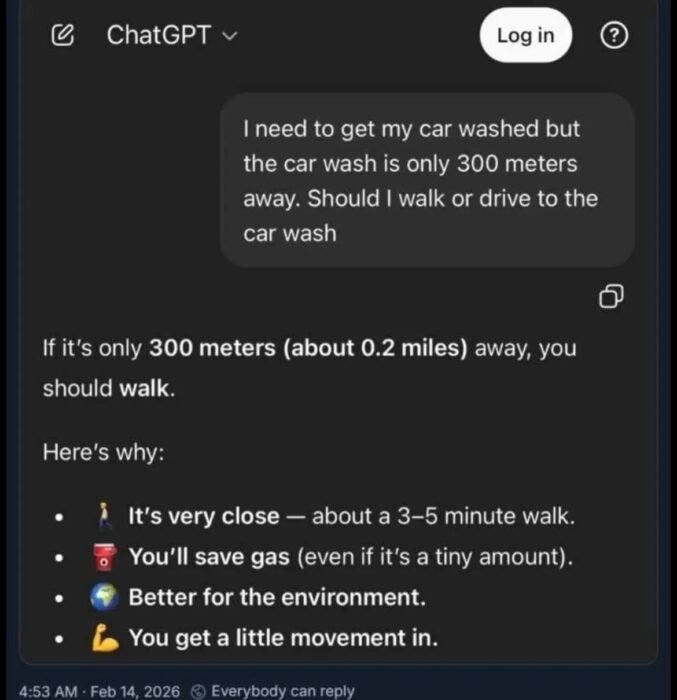
There’s more fine work out there, created by humans, than any of us will have time to experience. Generative AI software benefits nobody, except the people who stole all that material and are using it without the creators’ permission or compensation. Its sole purpose is to pay artists and writers even less than the pittance they have been making, in hopes that people will become so accustomed to substandard product that they just accept it.
Generative AI may become a more accurate mockery of human-created content, harder to distinguish from human-created works by automated testing. But it will never achieve depth or relevance to the human experience, because it will never have a human mind and heart. In fact, it’s on track to get worse in that respect, as the software gobbles up its own slop as training materials, further diluting the influence of actual humans. To the extent this software makes it harder for people to make a living in creative fields, it’s shutting down the flow of new human-created material that genAI needs to keep whatever relevance it has.
People seem to think that the types of art others create are easy, while recognizing the struggle they went through to achieve proficiency in their own field.
As I associate with writers, artists, and musicians, I’ve noticed many of them to object to generative AI being used in their own fields, but don’t seem to extend the principle to types of media other than their own. An author sees no problem with using AI-generated cover art, for instance. If this describes you, I ask you to articulate your basis for objecting to genAI in your own field, then explain why that doesn’t apply to other creative endeavors.
People seem to think that the types of art others create are easy, while recognizing the struggle they went through to achieve proficiency in their own field. As a writer, I sometimes get people coming up to me to suggest I write the book they have this terrific idea for (which they’ll reveal to me if I agree with their proposal), and we’d split the proceeds — as if coming up with an idea were half the work. Folks, I have notebooks full of terrific ideas. Ideas are not in short supply. Time to execute them properly is. Your typing your idea as a prompt into a slop generator, doesn’t make you an artist or author.
The techbros, and a large part of the public, fail to understand that writing and art aren’t just a way to create a product — the process is important to the artist. When I write an essay (this one, for instance) I’m not just making content. Writing is a way to organize my thoughts. Painting or drawing is a way to find out what’s under your surface thoughts about your subject. If you take the easy way out just so you can have “content”, you’re cheating yourself of the experience of creating. By working through it yourself, not only do you create something you can be sure you agree with and can be proud of, you’re better equipped to talk about it, you’ve explored into the corners and made discoveries that you would otherwise have never realized. And you’ve kept your skills and knowledge sharp so when you need to talk about the subject off the cuff, you don’t come off sounding like an idiot.
In solidarity with all writers and other creative professionals, therefore, I reject generative AI tools for all types of media. Anything that purports to replace human creatives, and anything that relies on a trove of stolen information, should be anathema to real artists who respect the value of each others’ work. This includes all my colleagues in other creative fields.
I draw a distinction between generative AI and real AI tools, such as grammar checkers and photo effect filters, which exist to assist creatives rather than supplant them. I have no objection to these. However, if your AI tools are part of the same software that includes generative AI, the I discourage the use of generative AI tools for any purpose. You may feel that whatever you’re doing doesn’t rely on the stolen data, but if that’s true, please try to find an alternative that doesn’t have stolen data and whose use doesn’t enrich the people who stole it.
Apart from the question of theft and the loss of the benefits of real art to our society and culture, I’m concerned with the environmental impact of the AI data centers, including their huge power demands, massive consumption of fresh water at a time when the world is in “global water bankruptcy,” and the injustice of the disproportionate effect of their emissions on poorer communities who lack the influence to resist facilities being sited there.
If you care about privacy or about fighting fascism, you should also be aware that the big AI companies share surveillance data with ICE. Your “prompts” are not private.
Just say no to generative AI.